
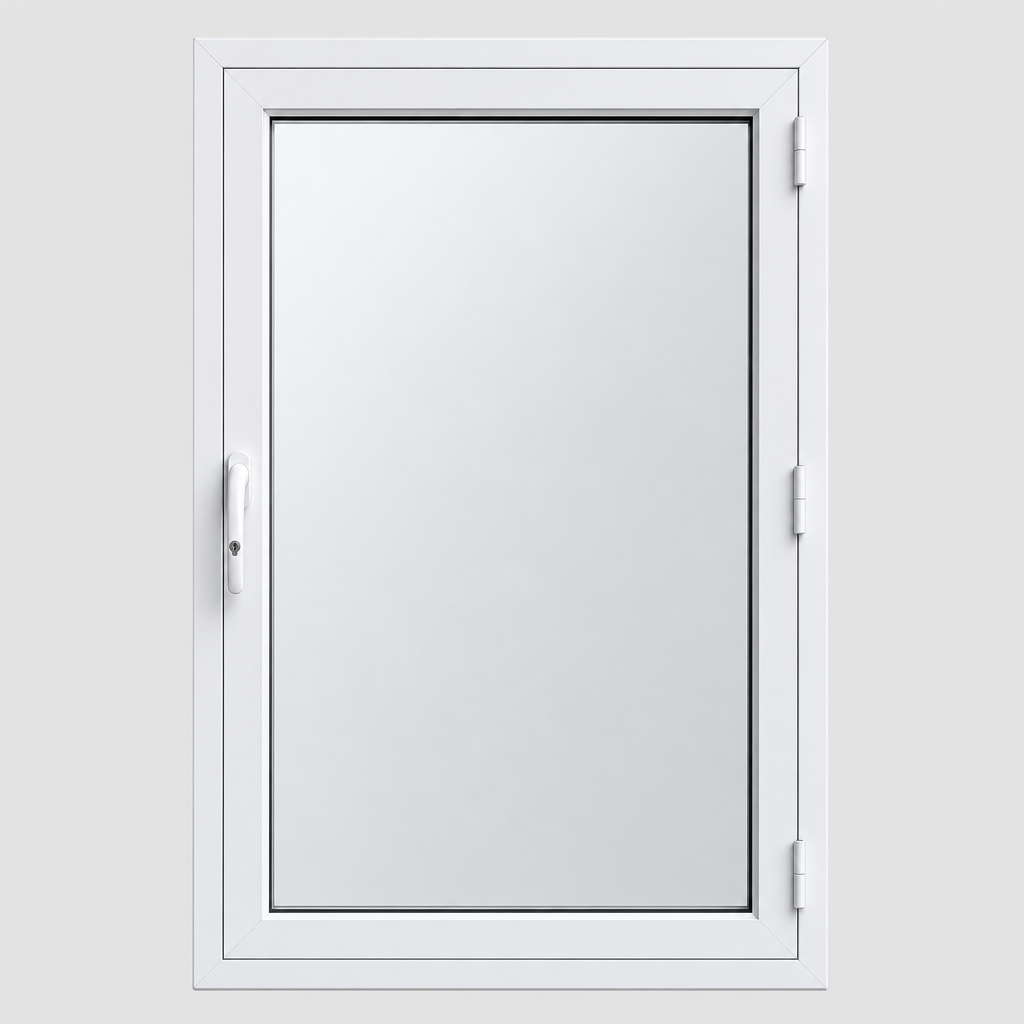
Hinged Casement Secondary Glazing
A framed unit on side or top hung hinges that swings fully open into the room. The system to choose when access, escape or security drive the decision.
How it operates
One or more casements hang on concealed or face fixed hinges within a slim outer frame, closing onto a continuous compression gasket and secured by an espagnolette or cockspur handle. Because the sash pulls tight onto a gasket rather than sliding past a brush seal, a hinged unit gives the best draught and acoustic seal of any openable system we fit. Top hung units are used at high level and over sinks, side hung for anything reachable.
What it suits
Fire escape windows, casement primaries with awkward handles, doors and door side lights, and any opening that has to be thrown wide quickly. The heavy duty variant takes a sealed double glazed unit up to 28mm, which makes it the option to specify when thermal performance is the priority rather than acoustics.
- Designated fire escape windows
- Doors, side lights and French doors
- Heavy duty version takes 28mm sealed units
- Slim line version for discreet sight lines
How it is fitted
The frame is templated and fixed into the reveal with the hinge side packed dead plumb, since a hinged sash will drop or spring open if the stile is out of true. Clearance into the room is checked at survey against radiators, window seats, blinds and curtain poles, because a casement needs swing space that a slider does not. Perimeter sealing is the same low modulus bead used across the range.
Cleaning and access to the original window
Open the casement and you have the whole opening, so cleaning both faces of the secondary glass and the original window is straightforward and needs no lifting. This is the easiest system in the range for a person who cannot handle a lift out panel, and the one we specify most often for elderly customers and for high use rooms.
- Full width access in one movement
- No lifting or panel storage
- Easy reach to primary window handles
- Restrictor stays available on request
Ventilation
Ventilation is unrestricted when open, and controlled by the handle when nearly closed: an espagnolette can be set on the night vent notch to leave a sealed but ventilated gap. Trickle vents can be fitted into the frame head where the primary window carried them. For fire escape openings we avoid any locking arrangement that needs a key from inside unless the customer specifically requests it and understands the escape implication.
Where it is the wrong choice
It is wrong where nothing can project into the room, such as behind a window seat, a deep sill of ornaments, a radiator shelf or a shutter box. It is wrong on very wide single openings, where a large hinged leaf becomes unwieldy and a horizontal slider is safer. And it is the wrong money on a window that never opens, where a lift out or fixed panel gives the same seal for less.
Frequently asked questions
Yes. A multi point or key locking espagnolette on a hinged unit, with laminated glass, is the strongest specification we offer for security.
Quote a hinged casement unit
Tell us the opening size and whether it is an escape window, and we will specify handles and glass accordingly.