
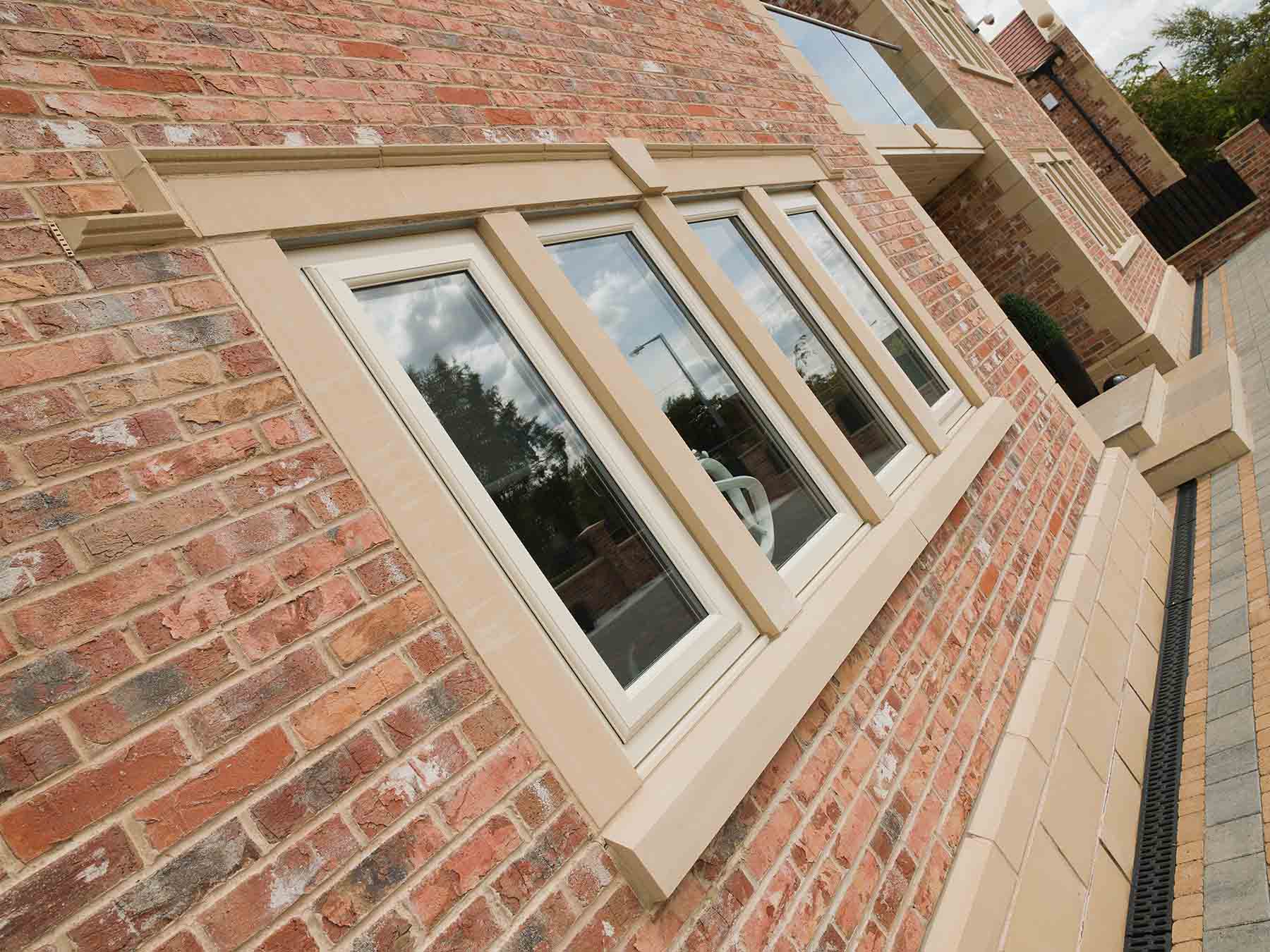
Secondary Glazing for Casement Windows
For most casement windows the best secondary glazing is a hinged unit that opens the same way as the original, or a horizontal slider where there is not room for a sash to swing. Both let you reach the original handle. Lift out panels suit casements that rarely open.
Why casements need a different approach from sashes
A sash window slides up and down, so a vertical slider mirrors it naturally. A casement is hinged at the side or top and opens outwards, operated by a handle and stay on the room side. Whatever sits in front of it has to move far enough out of the way for you to reach that handle and swing the window open. That single requirement drives the choice of system.
Hinged units: the closest match
A hinged secondary unit opens inwards like a door. It can be divided to follow the original mullions, so a two light casement gets a two leaf secondary unit with its meeting line behind the original mullion. When open, it gives full access to the handle and the glass for cleaning. It needs clear space in the room for the leaf to swing, so check for radiators, deep sills and furniture.
- Opens the same way as the original
- Leaves line up with mullions
- Full access for cleaning
- Needs swing clearance in the room
Horizontal sliders: when space is tight
Where a leaf cannot swing, for example above a kitchen worktop or behind a radiator, a horizontal slider moves sideways on a track instead. Two or three panes slide past each other, so you can reach each part of the original window in turn. On a wide casement bay this is often the tidiest option, and the meeting stiles can be set behind the original mullions.
Lift out panels: for windows that stay shut
Plenty of casements are never opened: a fixed side light, a stair window or a bathroom window with an extractor fan. A lift out panel gives the best seal for the least frame and is removed only for cleaning. It is the neatest look of all, because there are no meeting rails.
Steel casements
Original steel casements, including Crittall, have very thin sections and single glazing, so they are cold and noisy. Secondary glazing keeps the slim steel look from outside while adding performance inside. A hinged unit in black is the usual choice to echo the steel frame. Our Crittall page covers these windows in more detail.
Timber and leaded casements
Cottage and Arts and Crafts casements often have leaded lights or small panes that owners want to keep. A room side secondary unit protects the leadwork from cleaning damage and condensation while leaving it untouched. Handles and stays on these windows tend to project, so the survey checks the depth needed for the secondary frame to sit clear.
Ventilation and escape
If a casement is the escape window for a bedroom, the secondary unit must open fully without tools and must not reduce the clear opening in a way that matters. Hinged units handle this best. Where a room relies on a trickle vent in the original frame, an equivalent vent can be specified in the secondary frame so background ventilation is kept.
Bay and corner casements
Casement bays combine several of these problems at once: angled corners, a deep board or sill, and often a radiator underneath. Each face of the bay is usually treated as its own opening, with a hinged or sliding unit sized to that face and neat corner posts where the faces meet. Treating the whole bay together matters, because a single untreated face lets cold air and noise back into the room. Our guide to heat loss through bay windows explains why bays are so often the coldest part of the house.
Choosing in practice
Open each casement and note which way it swings, how far the handle projects and what sits below it. Windows opened daily usually suit hinged units; windows with obstructions suit sliders; windows that stay shut suit lift outs. Mixing types in one house is normal and keeps each room practical.
Frequently asked questions
Usually a hinged unit that mirrors the original opening. Where there is not room for it to swing, a horizontal slider is the alternative.
Ready for a free, no-obligation quote?
South Yorkshire's specialists in secondary glazing — survey, measure, manufacture and install.