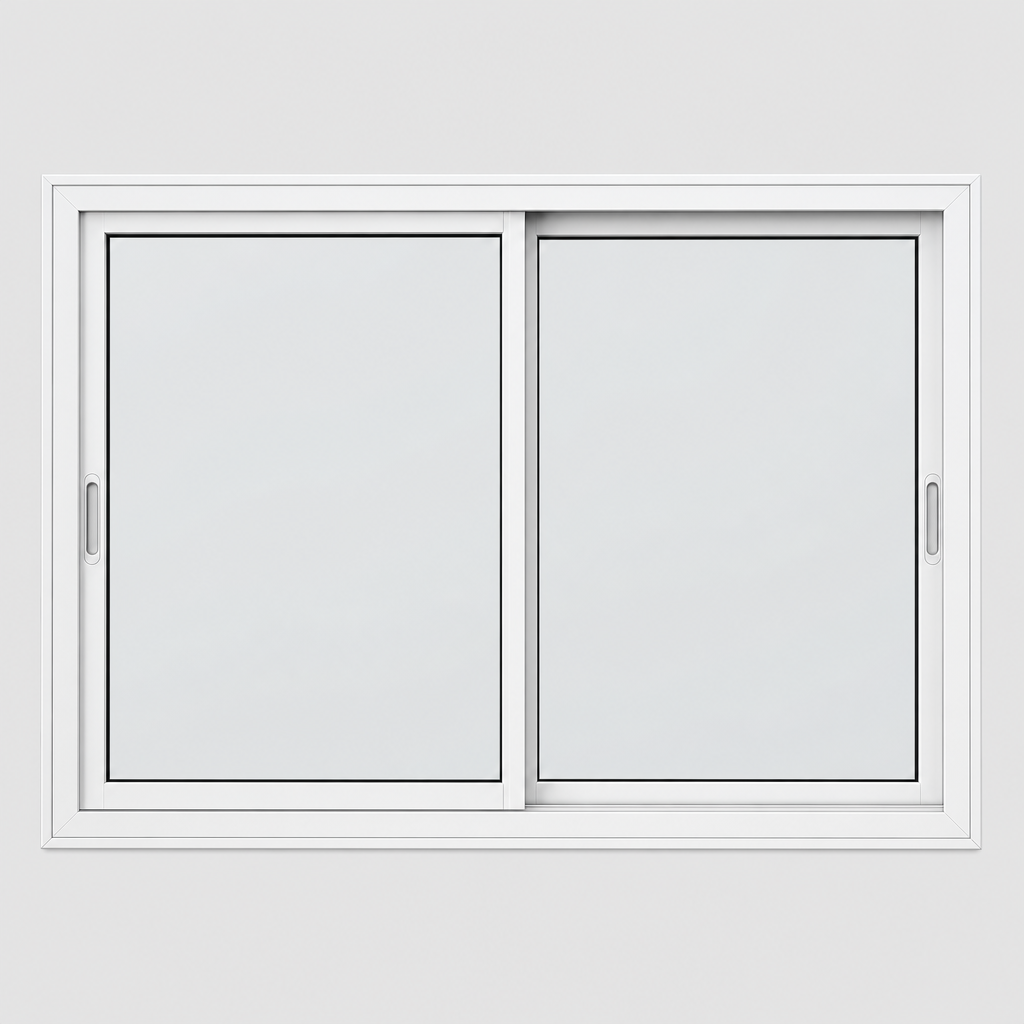
Horizontal Sliding Secondary Glazing
The most versatile system in our range. Two, three or four panels slide effortlessly on twin tracks — perfect for casement primary windows.
Smooth, low-friction operation
Every horizontal slider runs on stainless-steel-bearing wheels and precision-milled aluminium tracks, so the panels glide with one finger even on windows over 2 metres wide.
- Twin-track or triple-track
- Panels lift out for cleaning
- Up to 6.8mm laminated glass
- Suits openings up to 3m wide
Ideal primary window pairings
Best suited to casement, tilt-and-turn, fixed picture and steel-frame primary windows. Also the standard choice for stone-mullioned bay windows where a vertical sash would be too tall.
Glass and thermal upgrades
Standard 4mm toughened. Optional 6.4mm or 6.8mm acoustic laminated for noise, or Low-E soft-coat for warmth. Combined with a 100–150mm cavity, the system delivers up to 80% noise reduction and 65% thermal improvement over single glazing.
- Acoustic laminated glass
- Low-E thermal coating
- Optional obscure/frosted glass
- Trickle vents on request
How it operates
Panels sit on stainless steel bearing wheels running in a milled bottom track, with a top track guiding them and taking the weather seal. Twin track puts two panels on separate runs so either side opens fully. Triple track lets two thirds of a wide opening be cleared at once, which matters on a three metre mullioned window. Brush pile seals on every meeting stile keep the acoustic and draught performance up while keeping the action light.
What it suits
Side hung casements, tilt and turn units, fixed picture windows, stone mullioned bays and Crittall style steel frames. It is the system that copes best with a wide opening, and the one that gives easiest reach to a primary handle set low or off to one side.
- Casement and tilt and turn primaries
- Openings up to around 3m wide
- Stone mullioned and bay windows
- Steel framed and Crittall style windows
How it is fitted
The opening is templated including diagonals and sill slope, because a sliding track that is not level will run heavy at one end. The frame is fixed into the reveal, or face fixed where the reveal is shallow, packed until the bottom track is dead level, then perimeter sealed. Sill slope is taken up with a purpose made angled subframe rather than packers, which is what keeps the panels from creeping open.
Cleaning and access to the original window
Panels lift out of the track from inside without tools, so both faces of the secondary glass and the outer window can be cleaned in a couple of minutes. In practice most people slide rather than lift for day to day access, and lift out twice a year to clean the cavity and the primary. Nothing about the fit stops the original window being opened, serviced or repainted.
- Panels lift out from inside
- Full access to the primary window
- Tracks vacuum clean in seconds
- No external access required
Ventilation
Sliding open even 100mm gives usable trickle ventilation without the noise penalty of a fully open window, and clearing a panel entirely restores full purge ventilation through the original casement. Where building regulations background ventilation is provided by trickle vents in the primary frame, we specify matching vents in the secondary head so the room keeps its designed airflow.
Where it is the wrong choice
It is the wrong system behind a box sash, where a vertical slider mirrors the original movement and looks right. It is wrong on a tall narrow opening, where the meeting stile lands across eye level. It is wrong on an arched or gothic head, which needs a templated Vision unit. And on a window that is never opened, a lift out or fixed panel seals better and costs less.
Frequently asked questions
We size panels so no single leaf becomes heavy to move, and split wider openings across three or four panels on a triple track instead.
Ready for a free, no-obligation quote?
South Yorkshire's specialists in secondary glazing — survey, measure, manufacture and install.