Norfolk Park · S2
Casement glazing in Norfolk Park, Sheffield
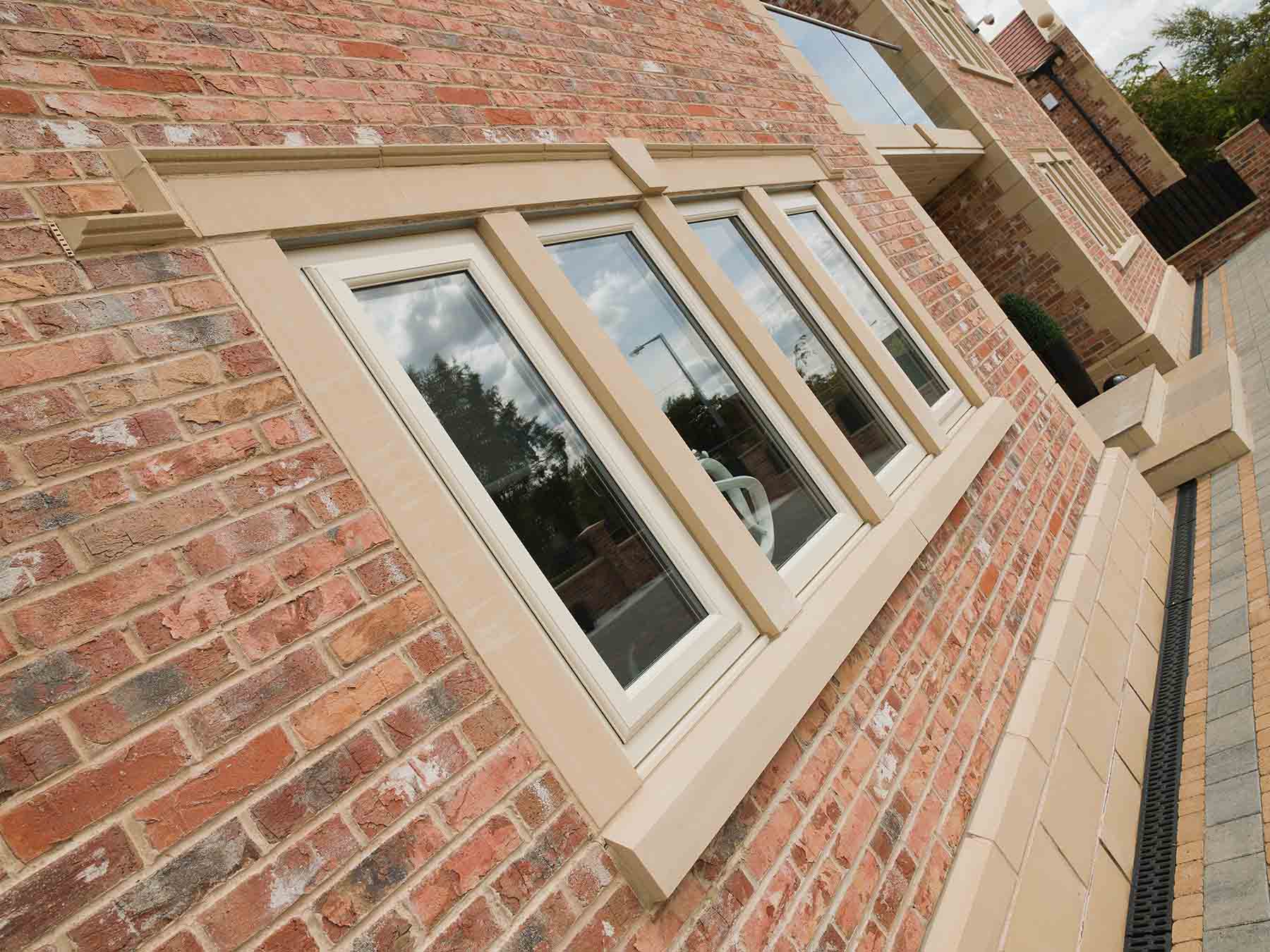
Casement glazing in Norfolk Park is common for a simple reason: the area is victorian park housing and later flats, and side-hung opening lights on hinges, often with a fixed pane and a top-hung vent is exactly what that period built. The problem we are asked to solve is the opening light and the handle furniture project into the reveal, so clearance has to be designed in. Norfolk Park is not a conservation area, so the decision is purely technical rather than a consent question. Most enquiries here come from owner-occupiers doing one or two rooms at a time, so we price per opening rather than per house. Our vans are in Sheffield most weeks; Norfolk Park is roughly 1 mile out from the centre, comfortably inside the South Yorkshire coverage area.
Aluminium systems are powder-coated to any RAL colour at no extra lead time.
A whole-house residential install is normally completed within a single working day.
Measured performance figures come from our own post-install testing, not manufacturer maximums.
Thermal figures quoted are whole-window, not centre-pane, which is the honest way to state them.
What goes in, and why
| Window type | side-hung opening lights on hinges, often with a fixed pane and a top-hung vent (found across every period, dominant in interwar and post-war housing) |
|---|---|
| Underlying problem | the opening light and the handle furniture project into the reveal, so clearance has to be designed in |
| System we fit | hinged secondary units, or lift-outs where the original is rarely opened |
| Glass specification | 4 mm Low-E as standard, 6.4 mm laminated on road-facing elevations |
| Measurement | we record handle and stay projection at survey because that dimension, not the glass, sets the cavity depth |
| Heritage position | on interwar stock the casements are usually not protected, which widens the specification options |
Survey notes from the area
Where a top-hung vent is used daily we split the secondary into two panels so the vent stays reachable.
Casement leakage concentrates at the meeting stile and around worn hinge packings, both of which a single sealed secondary panel bypasses entirely.
Norfolk Park stock is Victorian park housing and later flats and the prevailing glazing is sashes and modern replacements, which is why casement glazing comes up here so often.
We record handle and stay projection at survey because that dimension, not the glass, sets the cavity depth.
Norfolk Park carries no conservation designation, so the specification is decided on performance alone.
Recent installs nearby
Nether Edge Grade II sash retrofit
Six original box sashes fitted with balanced vertical secondary sliders — full listed-building consent secured in six weeks.
Ecclesall Road bay-window sound retrofit
Three-panel horizontal sliders across a 3.2 m Edwardian bay — Rw measured at 47 dB post-install.
Kelham Island loft conversion
Four large steel-frame factory openings sealed with slim satin-anodised horizontal sliders. Post-install U-value 1.87 W/m²K.
Local reference points
- Area
- Norfolk Park (S2)
- Town
- Sheffield, South Yorkshire
- Housing era
- Victorian park housing and later flats
- Typical windows
- sashes and modern replacements
- Landmark
- Norfolk Heritage Park
- Conservation area
- No
- Window style
- Casement Windows
- Period
- found across every period, dominant in interwar and post-war housing
Common questions
Will the secondary unit foul the casement handle?
Not if the cavity is set from the hardware projection, which is what we measure on survey. It is the most common cause of a badly-fitting retrofit elsewhere.
Hinged or lift-out for a casement?
Hinged if you open the window regularly, lift-out if you do not — lift-outs are slimmer and cheaper but need somewhere to store the panel.
Can you cover a fixed light and an opener together?
Yes, usually with a two-panel unit so the opener stays accessible and the fixed light is sealed.
Can we do one room now and the rest later?
Yes. We template and price per opening, so a later phase is quoted at the same rate — there is no penalty for splitting the work.
Will it get in the way of curtains or blinds?
Rarely. Reveal-fixed units sit inside the existing recess; where the recess is shallow we face-fix and reposition the blind, which we flag at survey rather than on the day.
What happens next
- Step 1
Send a photo of the window — with side-hung opening lights on hinges we can usually tell you the likely system before we visit.
- Step 2
Survey in Norfolk Park: we record handle and stay projection at survey because that dimension, not the glass, sets the cavity depth.
- Step 3
Manufacture to the templated sizes with your chosen finish.
- Step 4
Room-side install with no external access and no alteration to the original frame.
Casement glazing in nearby areas
Casement glazing in Norfolk Park — the short version
The opening light and the handle furniture project into the reveal, so clearance has to be designed in. We fit hinged secondary units, or lift-outs where the original is rarely opened with 4 mm Low-E as standard, 6.4 mm laminated on road-facing elevations, templated to your opening. A single hinged panel seals the whole opening including the fixed light, which is where most of the leakage actually is.
Start with one room
Send the opening sizes for the worst room and we will price that first — extending later costs no more. Send a photo of the casement glazing — with side-hung opening lights on hinges in a victorian park housing and later flats Norfolk Park property we can usually spec it before we visit.