
What Is Secondary Glazing?
Secondary glazing is a slim second window fitted on the room side of your existing one. The two windows stay independent, separated by an air cavity of anything from 50mm to 200mm, and it is that cavity that does most of the work.
How it actually works
Sound and heat both have to cross two panes and the air between them. The wider that air gap, the harder it is for sound energy to carry across, because the two panes are physically decoupled rather than locked together in one sealed unit. Heat loss falls because the trapped air is still and the room side pane sits close to room temperature. Draughts stop because the new frame is sealed continuously to the reveal, which the original window never was.
How it differs from double glazing
A double glazed unit is one sealed component with a cavity of roughly 12mm to 20mm, filled with gas and fitted in place of your window. Secondary glazing is a separate window with a cavity five to ten times deeper, fitted in front of a window you keep. Double glazing wins slightly on sight lines and needs the old window removed. Secondary glazing wins clearly on noise, keeps the original window, and is reversible.
- Double glazing: one sealed unit, 12mm to 20mm cavity
- Secondary: two windows, 50mm to 200mm cavity
- Secondary is reversible, double glazing is not
- Secondary keeps original joinery and glass
What it is made of
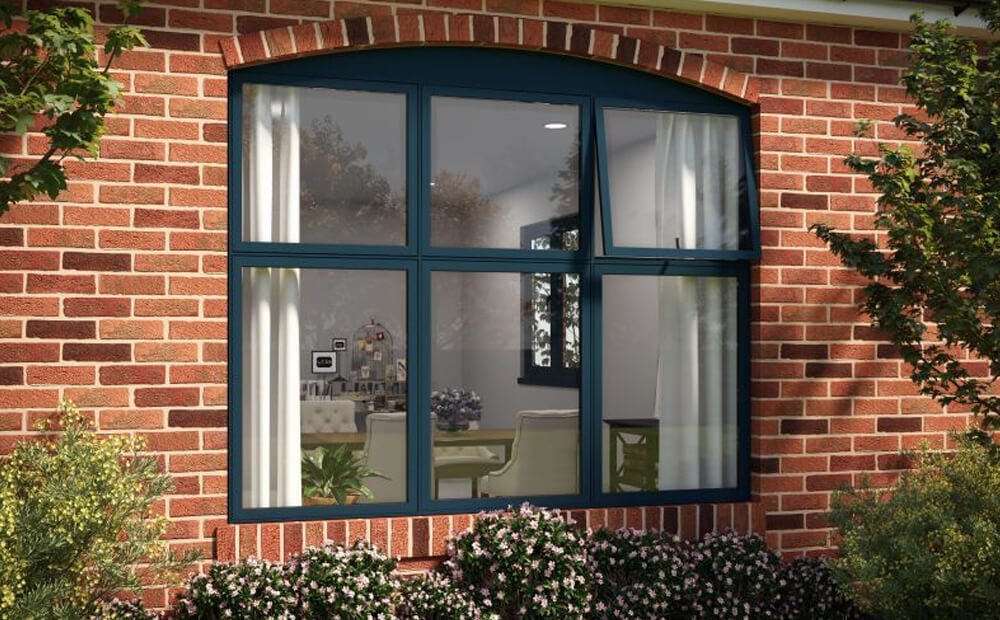
The frames are slim polyester powder coated aluminium, available in white, black, heritage colours and any RAL shade. Glass options run from 4mm toughened float, through Low E soft coat for warmth, to 6.4mm and 6.8mm acoustic laminated for noise. Heavy duty hinged systems accept sealed double glazed units up to 28mm where thermal performance is the priority.
What it realistically delivers
Correctly specified and sealed, it removes draughts entirely, materially reduces road, rail and aircraft noise, warms the perimeter of the room, and usually stops condensation forming on the room side pane. It does not repair the original window, does not silence a room, and will not help with noise arriving through walls, floors or ventilation.
Frequently asked questions
Broadly yes in principle, but a framed made to measure aluminium system seals and lasts better than a light magnetic or acrylic insert.
Ready for a free, no-obligation quote?
South Yorkshire's specialists in secondary glazing — survey, measure, manufacture and install.