
What Does Secondary Glazing Look Like?
From outside, well fitted secondary glazing is almost invisible: you see your original window, with perhaps a faint second reflection. From inside, you see a slim aluminium frame set into the reveal, ideally with its bars lined up behind the original sash rails so the view is not cut in new places.
From the street
The original window stays exactly where it is, so the elevation is unchanged. Passers by see the same glazing bars, putty lines and paint colour. On a bright day you may notice a second reflection in the glass, and at night with lights on a thin frame line can be seen through the pane. This is why conservation officers generally treat room side secondary glazing as the least intrusive way to upgrade a historic window.
From inside the room
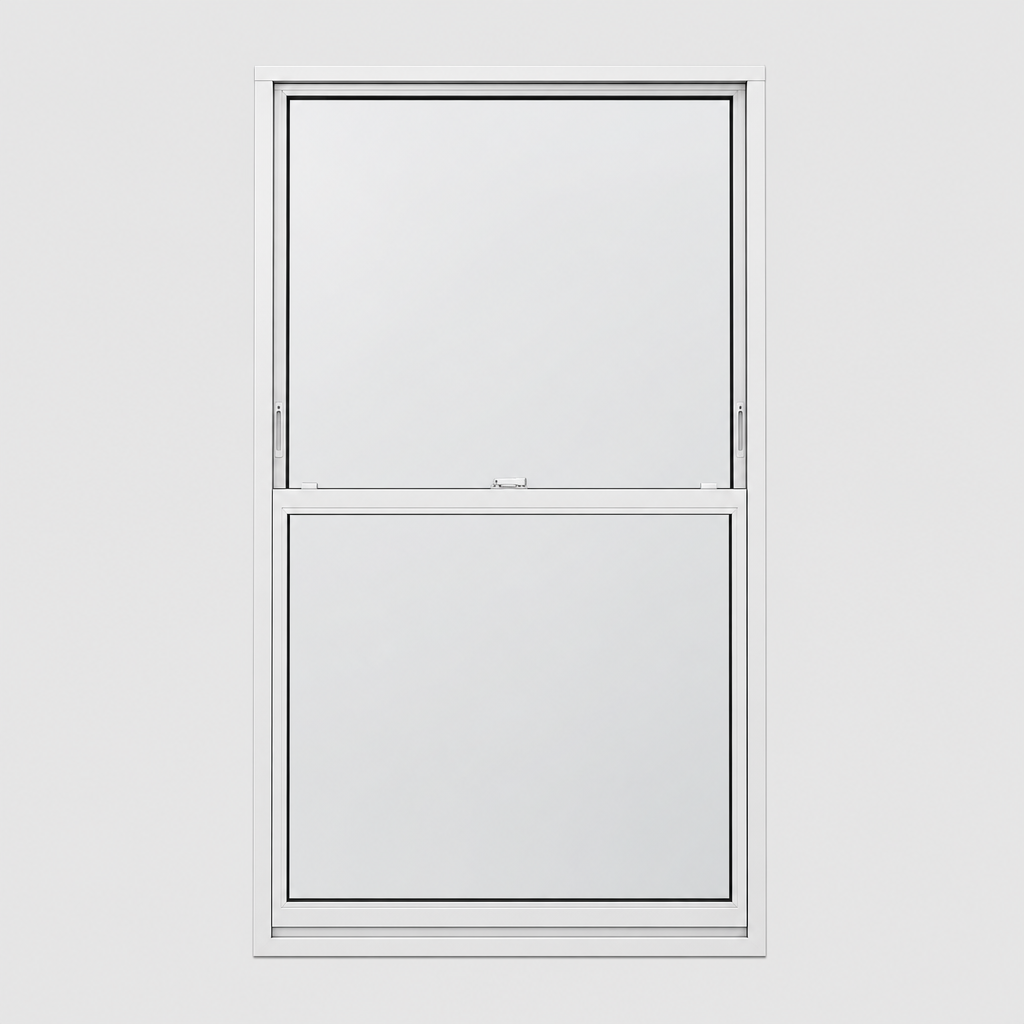
Inside, you see a slim powder coated aluminium frame fixed into the window reveal or onto the face of the architrave. The frame is usually set back far enough to clear handles, stays and shutters. Because it follows the shape of the opening, including arched heads on our Vision range, it reads as part of the window rather than an add on.
- Slim aluminium frame inside the reveal
- Follows arched and shaped heads
- Clears handles, stays and shutters
- Finished in white, black or a RAL colour
Lining up the sightlines
The most important visual decision is where the meeting rails and stiles fall. On a sash window a vertical slider is set so its meeting rail sits directly behind the original, which hides it almost entirely when you look out. On a casement, a hinged or horizontal sliding unit is divided to follow the original mullions. Getting this right is the difference between a window that looks untouched and one that looks divided in odd places.
Colour and finish
White is the default because it disappears against painted reveals. Black works well behind dark steel frames such as Crittall, where it echoes the original section. Any of 200+ RAL colours can be matched to paintwork or joinery. A satin or matt finish tends to look calmer than gloss on period interiors.
How deep it sits
The gap between the original and secondary pane is set by the goal. A thermal specification can sit closer to the original window; a noise specification benefits from a larger cavity, which moves the secondary frame further into the room. On shallow reveals a frame can be fixed to the face of the architrave instead, which is visible but still neat and fully reversible.
What changes day to day
Most owners stop noticing the frame within a week. What they notice is the room: no draught at the window, less street noise, and a warmer surface to sit beside. The original window still opens once the secondary unit is slid, hinged or lifted clear, and blinds and curtains can usually stay where they are.
Common worries about appearance
Owners often worry that a second window will make the room feel boxed in, or that the frame will catch the eye every time they look out. In practice the frame sits inside the depth of the reveal, so the room loses no floor space, and the eye reads the view through both panes as one. Reflections are most noticeable at night with a lamp close to the glass; moving the lamp or drawing a blind removes them. Dust in the cavity is the other visible issue, and it is solved by wiping the inner faces once or twice a year, which every unit we fit is designed to allow.
Seeing it before you commit
If appearance matters, ask for the frame profile and colour sample on survey and check the proposed division lines against your original window. For listed properties we provide drawings that show the frame position relative to the historic fabric, which also helps with any consent discussion.
Frequently asked questions
Barely. The original window is unchanged; at most you may see a faint second reflection or a thin frame line at night.
Ready for a free, no-obligation quote?
South Yorkshire's specialists in secondary glazing — survey, measure, manufacture and install.