
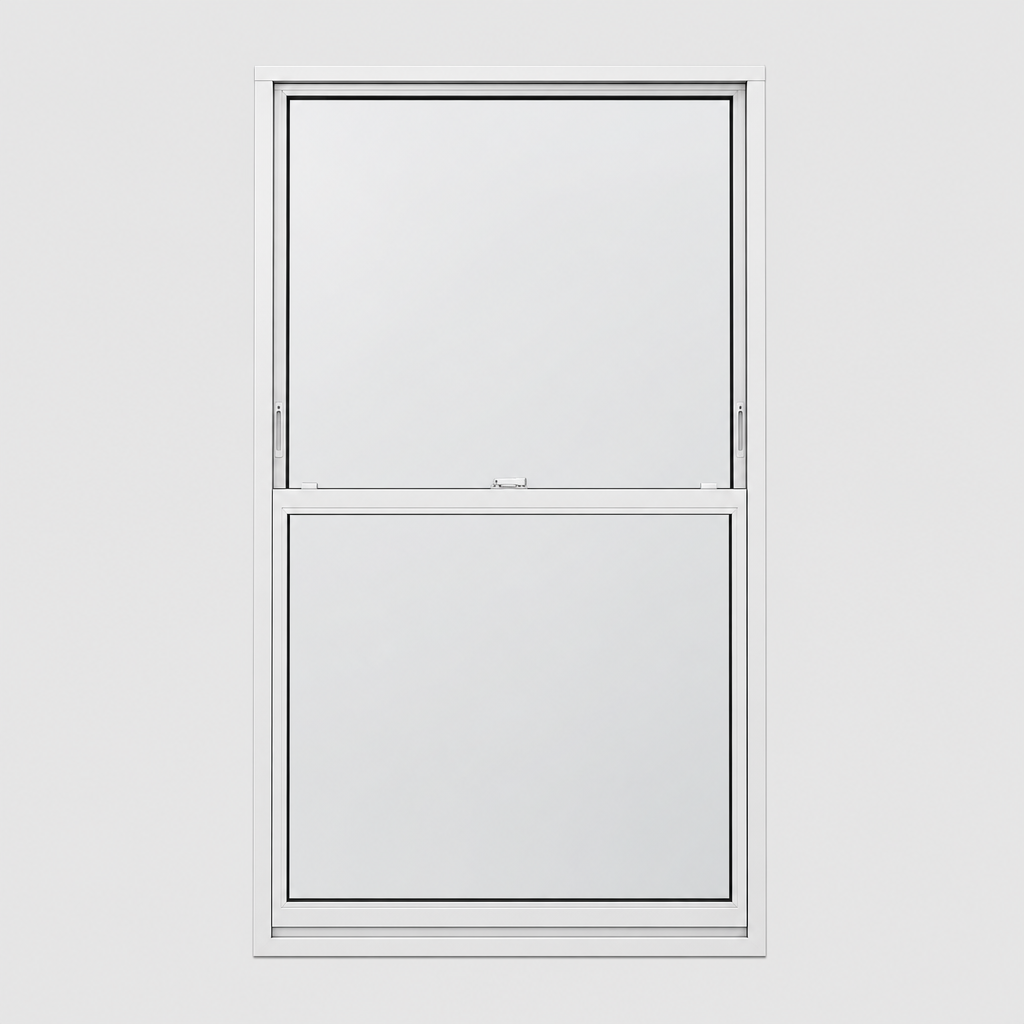
Vertical Sliding Secondary Glazing
Counterbalanced vertical sashes designed to mirror the movement of your original window — the heritage-appropriate choice for period property.
Weighted, effortless movement
Concealed spring balances take the weight of the glass so the sashes lift with one finger and stay exactly where you leave them. No cords, no chains, no visible mechanism.
- Concealed spring balances
- Both sashes fully operable
- Sashes tilt in for cleaning
- Suits openings up to 2.4m high
Heritage aesthetics
Slim aluminium sight-lines that sit discreetly behind the original sash — completely reversible and approved for use in listed buildings and conservation areas across South Yorkshire.
Acoustic and thermal performance
Upgrade to 6.4mm acoustic laminated glass for up to 80% noise reduction — ideal for townhouses on busy roads. Low-E glass keeps rooms warmer in winter and cooler in summer.
- Approved for listed buildings
- Acoustic upgrade available
- Low-E thermal glass
- White, black, or 200+ RAL colours
How it operates
Two aluminium sashes run in a slim outer frame on side channels. Concealed spiral spring balances are matched to the exact weight of each sash and its glass, so the sash lifts with one hand and stays where it is left. Both sashes move, so you can open from the top, the bottom, or both at once for a convection draw. There are no cords, weights or visible mechanism, and the balances are adjustable if the glass specification changes later.
What it suits
Box sash and vertical sliding primary windows, which means most Georgian, Victorian and Edwardian houses, mill conversions with tall openings, and period flats. It is also the sensible choice wherever a horizontal slider would put a meeting stile straight across the middle of a tall, narrow opening and spoil the view.
- Timber box sash windows
- Tall narrow openings up to around 2.4m high
- Listed and conservation area properties
- Rooms where the original window is still in daily use
How it is fitted
Every opening is templated on site, including both diagonals, because sash reveals are rarely square. The outer frame is fixed into the reveal or onto the face of the architrave depending on the depth available, packed and levelled so the sashes run true, then sealed to the plaster line with a low modulus sealant. A typical house of eight to twelve openings is fitted in one to two days, with no external access and no scaffolding.
Cleaning and access to the original window
Both sashes tilt in or lift out on their catches, so you can reach the outer face of the secondary glass and the inner face of the original sash without tools. That matters more than people expect: the cavity between the two windows collects a little dust each year and needs wiping. Where a room has working shutters we set the frame back so the shutters still fold across.
- Sashes tilt in for cleaning
- No tools needed for routine access
- Original sash still fully operable
- Shutters and existing blinds retained
Ventilation
Because both sashes slide, background and purge ventilation are unaffected. Open the secondary sash and the original sash together and you have the same airflow as before. Where a room relies on a trickle vent in the primary frame, we either align an equivalent vent in the secondary frame or leave a controlled overlap, so the room does not lose its designed background ventilation. Sealing a room completely is how condensation problems get moved rather than solved.
Where it is the wrong choice
It is the wrong product on a casement primary window, where a horizontal slider gives better access to the handle. It is wrong on an opening much over 2.4m high, where a triple track vertical slider or a split unit is safer to operate. It is wrong where the reveal is too shallow to hold a running frame, in which case a lift out panel or a hinged unit fits better. And on a window that never opens, a fixed or lift out panel gives a better seal for less money.
Frequently asked questions
Yes. Slide the secondary sash clear and the original window operates exactly as before. Nothing is fixed to the historic frame.
Ready for a free, no-obligation quote?
South Yorkshire's specialists in secondary glazing — survey, measure, manufacture and install.