
Thornes · WF2
Casement glazing in Thornes, Wakefield
Around Thornes Park, Thornes still carries a lot of original glazing — tall sashes with margin lights. Where those are found across every period, dominant in interwar and post-war housing the failure mode is predictable: the opening light and the handle furniture project into the reveal, so clearance has to be designed in. on interwar stock the casements are usually not protected, which widens the specification options Owners here are usually working under consent constraints, so the specification has to satisfy a conservation officer before it satisfies a decibel target. Coverage runs across Wakefield and the surrounding WF1, WF2, WF3 districts, with Thornes (WF2) among the areas we survey most often.
Local detail that changes the job
Where a top-hung vent is used daily we split the secondary into two panels so the vent stays reachable.
Handle and stay projection sets the minimum cavity, so we measure hardware rather than assuming a nominal gap.
Thornes stock is Georgian and Victorian villas and the prevailing glazing is tall sashes with margin lights, which is why casement glazing comes up here so often.
We record handle and stay projection at survey because that dimension, not the glass, sets the cavity depth.
Thornes is a conservation area: on interwar stock the casements are usually not protected, which widens the specification options.
Local reference points
- Area
- Thornes (WF2)
- Town
- Wakefield, West Yorkshire
- Housing era
- Georgian and Victorian villas
- Typical windows
- tall sashes with margin lights
- Landmark
- Thornes Park
- Conservation area
- Yes — room-side install standard
- Window style
- Casement Windows
- Period
- found across every period, dominant in interwar and post-war housing
How the job runs
- Step 1
Send a photo of the window — with side-hung opening lights on hinges we can usually tell you the likely system before we visit.
- Step 2
Survey in Thornes: we record handle and stay projection at survey because that dimension, not the glass, sets the cavity depth.
- Step 3
Manufacture to the templated sizes with your chosen finish.
- Step 4
Room-side install with no external access and no alteration to the original frame.
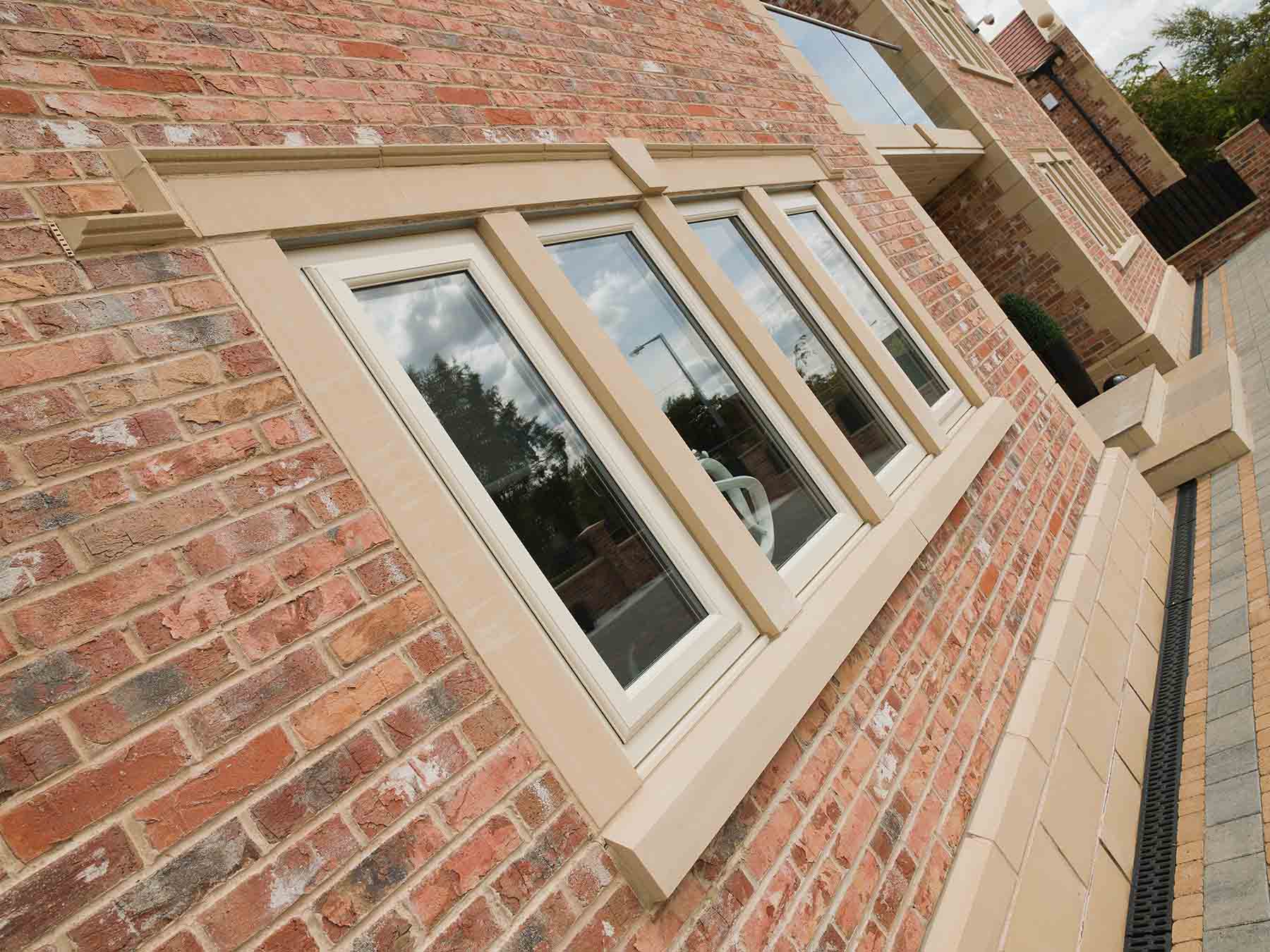
What we actually fit
| Window type | side-hung opening lights on hinges, often with a fixed pane and a top-hung vent (found across every period, dominant in interwar and post-war housing) |
|---|---|
| Underlying problem | the opening light and the handle furniture project into the reveal, so clearance has to be designed in |
| System we fit | hinged secondary units, or lift-outs where the original is rarely opened |
| Glass specification | 4 mm Low-E as standard, 6.4 mm laminated on road-facing elevations |
| Measurement | we record handle and stay projection at survey because that dimension, not the glass, sets the cavity depth |
| Heritage position | on interwar stock the casements are usually not protected, which widens the specification options |
Every opening is templated on site — we do not price secondary glazing by the square metre.
Listed-building drawings and specifications are prepared free with the quote where consent is needed.
Measured performance figures come from our own post-install testing, not manufacturer maximums.
We survey with a sound level meter where noise is the driver, so the target is a number rather than an impression.
Common questions
Will the secondary unit foul the casement handle?
Not if the cavity is set from the hardware projection, which is what we measure on survey. It is the most common cause of a badly-fitting retrofit elsewhere.
Hinged or lift-out for a casement?
Hinged if you open the window regularly, lift-out if you do not — lift-outs are slimmer and cheaper but need somewhere to store the panel.
Can you cover a fixed light and an opener together?
Yes, usually with a two-panel unit so the opener stays accessible and the fixed light is sealed.
Will the conservation officer accept this?
Room-side secondary glazing is the standard recommendation in Historic England guidance because it is reversible and invisible externally. We supply the drawings with the quote.
Is anything fixed into the original joinery?
No. We fix into the reveal or a timber subframe, never the historic sash or casement itself, so the install fully reverses.
Recent installs nearby
St John's Georgian townhouse
Small-pane Georgian sashes protected with Vision HD slim satin white units — invisible from the street.
Nether Edge Grade II sash retrofit
Six original box sashes fitted with balanced vertical secondary sliders — full listed-building consent secured in six weeks.
Ecclesall Road bay-window sound retrofit
Three-panel horizontal sliders across a 3.2 m Edwardian bay — Rw measured at 47 dB post-install.
Talk it through first — Windows
Five minutes on the phone is usually enough to know whether this is the right fix. Send a photo of the casement glazing — with side-hung opening lights on hinges in a georgian and victorian villas Thornes property we can usually spec it before we visit.
Casement glazing in Thornes — the short version
The opening light and the handle furniture project into the reveal, so clearance has to be designed in. We fit hinged secondary units, or lift-outs where the original is rarely opened with 4 mm Low-E as standard, 6.4 mm laminated on road-facing elevations, templated to your opening. A single hinged panel seals the whole opening including the fixed light, which is where most of the leakage actually is.