
Dore · S17
Crittall glazing in Dore, Sheffield
We work on crittall glazing across Sheffield, and Dore is one of the areas it comes up most. Steel conducts heat straight through the frame, so the frame itself is the cold bridge, not just the glass — which is why a room-side pane, rather than a replacement, is the answer here. original Crittall units are increasingly valued and often retained deliberately; a room-side pane lets you keep the look and fix the performance Owners here are usually working under consent constraints, so the specification has to satisfy a conservation officer before it satisfies a decibel target. Our vans are in Sheffield most weeks; Dore is roughly 6 miles out from the centre, comfortably inside the South Yorkshire coverage area.
Why this area is different
We align the secondary sightlines with the existing glazing bars where possible so the grid pattern still reads from inside the room.
On a steel window the frame can lose more heat than the glass; that is why replacing the glass alone rarely fixes a Crittall's condensation.
Dore stock is stone village core plus 1930s and the prevailing glazing is stone-mullioned casements, which is why crittall glazing comes up here so often.
Steel frames rarely sit true, so every opening is templated individually rather than batched.
Dore is a conservation area: original Crittall units are increasingly valued and often retained deliberately; a room-side pane lets you keep the look and fix the performance.
How the job runs
- Step 1
Send a photo of the window — with slim galvanised or painted steel frames with small rectangular panes and thin glazing bars we can usually tell you the likely system before we visit.
- Step 2
Survey in Dore: steel frames rarely sit true, so every opening is templated individually rather than batched.
- Step 3
Manufacture to the templated sizes with your chosen finish.
- Step 4
Room-side install with no external access and no alteration to the original frame.
How we would spec this
| Window type | slim galvanised or painted steel frames with small rectangular panes and thin glazing bars (1920s–1960s, and again in modern conversions) |
|---|---|
| Underlying problem | steel conducts heat straight through the frame, so the frame itself is the cold bridge, not just the glass |
| System we fit | slim-profile hinged or sliding units set to preserve the grid pattern |
| Glass specification | Low-E glass with a wide cavity, because the frame conduction dominates the heat loss |
| Measurement | steel frames rarely sit true, so every opening is templated individually rather than batched |
| Heritage position | original Crittall units are increasingly valued and often retained deliberately; a room-side pane lets you keep the look and fix the performance |
Local reference points
- Area
- Dore (S17)
- Town
- Sheffield, South Yorkshire
- Housing era
- stone village core plus 1930s
- Typical windows
- stone-mullioned casements
- Landmark
- Dore Village Green
- Conservation area
- Yes — room-side install standard
- Window style
- Crittall & Steel Windows
- Period
- 1920s–1960s, and again in modern conversions
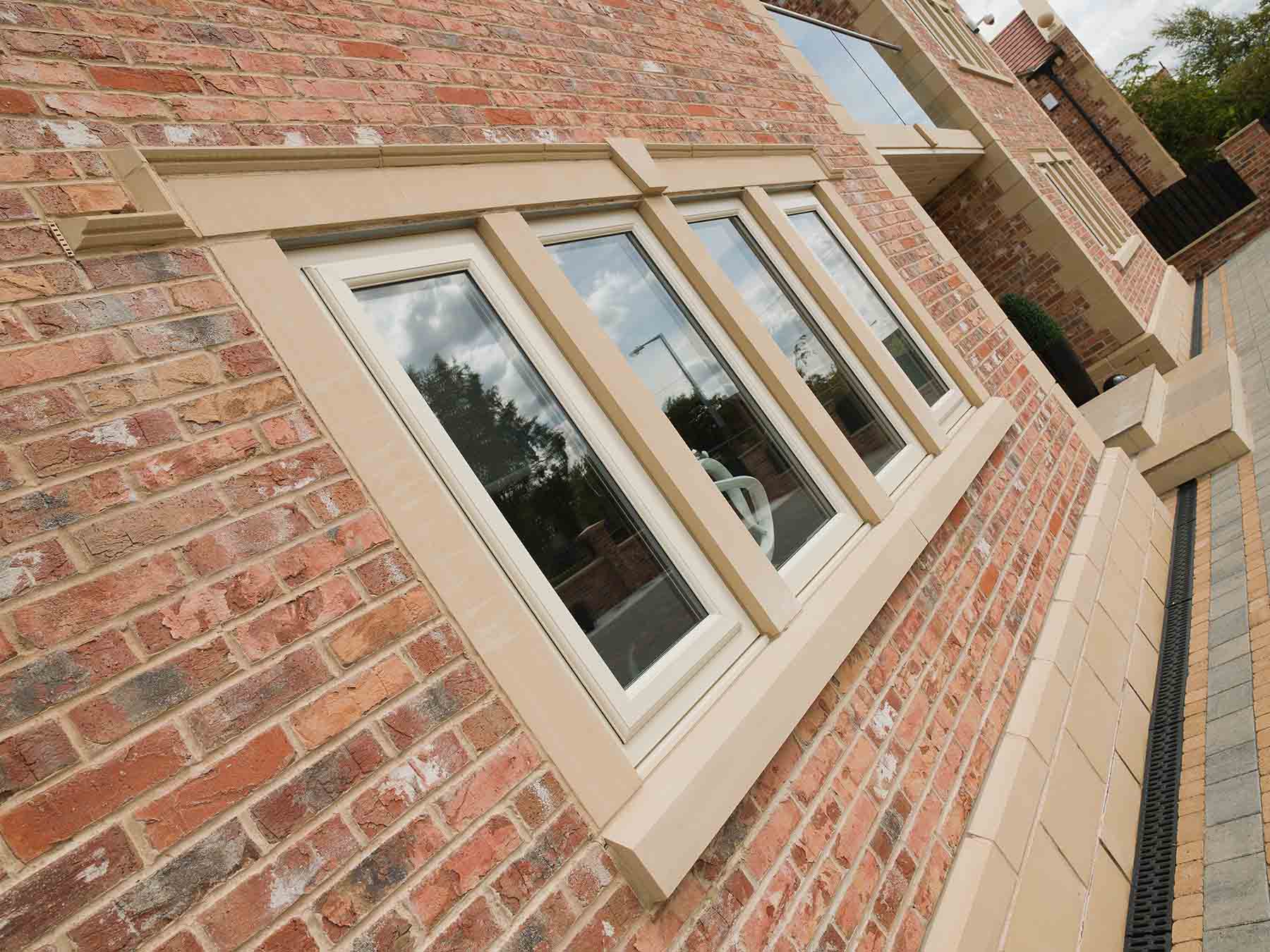
Quotes are written, itemised per opening, and hold for 60 days.
Listed-building drawings and specifications are prepared free with the quote where consent is needed.
We survey with a sound level meter where noise is the driver, so the target is a number rather than an impression.
Thermal figures quoted are whole-window, not centre-pane, which is the honest way to state them.
Recent installs nearby
Dore Village Grade II cottage
Stone-mullioned casements retained; hinged units templated to the deep reveals in Vision HD satin white.
Nether Edge Grade II sash retrofit
Six original box sashes fitted with balanced vertical secondary sliders — full listed-building consent secured in six weeks.
Ecclesall Road bay-window sound retrofit
Three-panel horizontal sliders across a 3.2 m Edwardian bay — Rw measured at 47 dB post-install.
Consent-ready specification — Windows
We prepare the drawings and product data your conservation officer will ask for, free with the quote. Send a photo of the crittall glazing — with slim galvanised or painted steel frames with small rectangular panes and thin glazing bars in a stone village core plus 1930s Dore property we can usually spec it before we visit.
Common questions
Why do my Crittall windows run with water?
Because the steel frame conducts heat out and drops well below room dew point. The water forms on the frame as much as the glass, which is why re-glazing alone does not solve it.
Will I lose the Crittall look?
No — the original stays in place and visible, and we align the secondary sightlines with the existing bars so the grid still reads.
Can you fit to rusted or distorted steel frames?
We fix to the reveal, not to the steel, so frame condition does not limit the install. We will flag any frame that needs remedial work first.
Will the conservation officer accept this?
Room-side secondary glazing is the standard recommendation in Historic England guidance because it is reversible and invisible externally. We supply the drawings with the quote.
Is anything fixed into the original joinery?
No. We fix into the reveal or a timber subframe, never the historic sash or casement itself, so the install fully reverses.
Crittall glazing in Dore — the short version
Steel conducts heat straight through the frame, so the frame itself is the cold bridge, not just the glass. We fit slim-profile hinged or sliding units set to preserve the grid pattern with Low-E glass with a wide cavity, because the frame conduction dominates the heat loss, templated to your opening. The cold-bridging frame is taken out of contact with room air, which is what stops the running condensation these windows are notorious for.