
Clay Cross · S45
Stone mullion glazing in Clay Cross, Chesterfield
If your Clay Cross property has chamfered stone mullions dividing narrow vertical lights, deep-set in a thick stone wall, this page is the specification we would quote. The local brief in S45 is usually cold terraces on an exposed ridge with heavy through-traffic, and deep stone reveals get warm enough to stop the damp patching that appears at the reveal corners. Clay Cross is not a conservation area, so the decision is purely technical rather than a consent question. Most enquiries here come from owner-occupiers doing one or two rooms at a time, so we price per opening rather than per house. Clay Cross is about 6 miles from central Chesterfield, so a survey here is a short run for our team off the M1 J29 / J30.
Aluminium systems are powder-coated to any RAL colour at no extra lead time.
One survey, one fitting team, no subcontracted installers.
Measured performance figures come from our own post-install testing, not manufacturer maximums.
Thermal figures quoted are whole-window, not centre-pane, which is the honest way to state them.
The technical answer
| Window type | chamfered stone mullions dividing narrow vertical lights, deep-set in a thick stone wall (17th to 19th century, common in Pennine and Peak-fringe stone housing) |
|---|---|
| Underlying problem | the reveal is deep, uneven and rarely plumb, so nothing off the shelf fits |
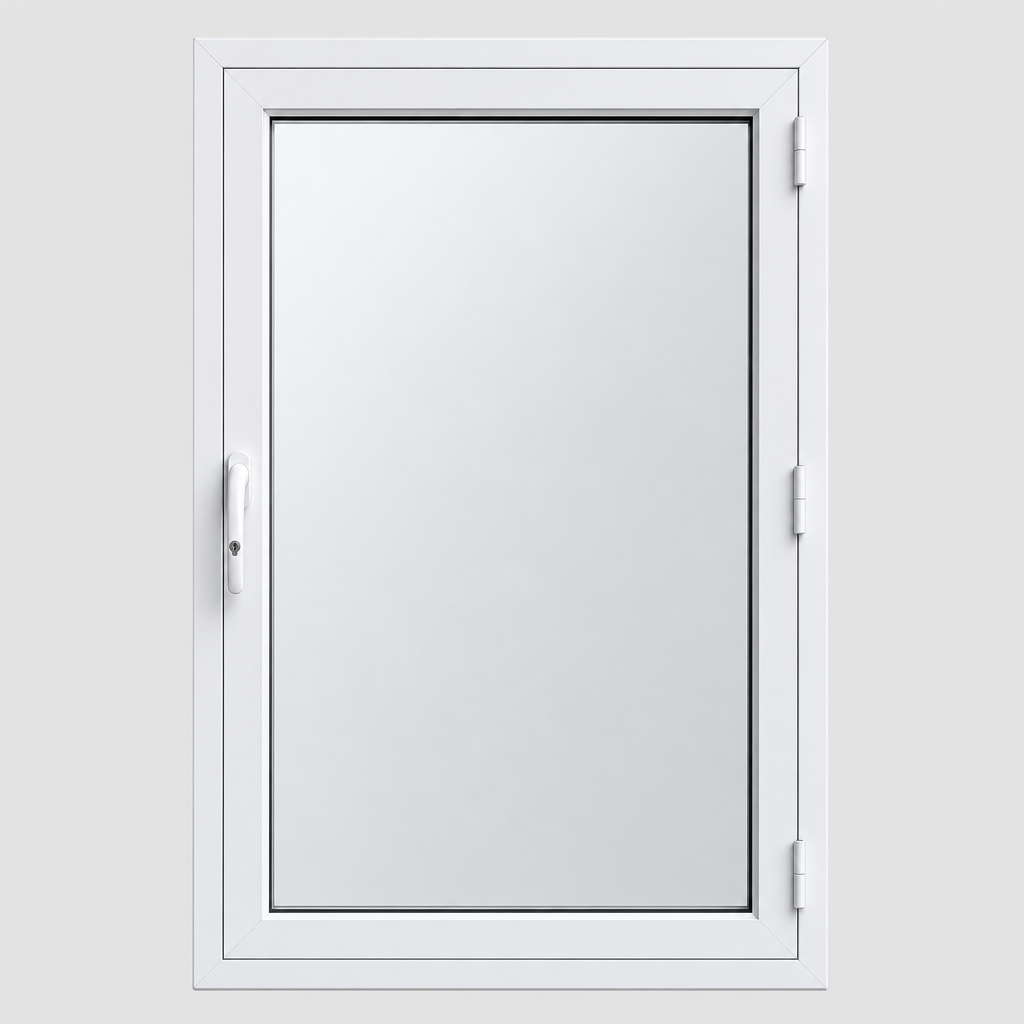
| System we fit | hinged units templated to each light, set into the reveal face |
| Glass specification | Low-E as standard; these buildings are usually driven by cold and damp rather than noise |
| Measurement | we template each light individually because the mullion spacing varies within a single opening on hand-cut stonework |
| Heritage position | the stonework is normally the listed or protected element, so fixings go into the internal lining or a timber sub-frame, never the stone |
Local conditions we design around
Fixing into a timber sub-frame or the internal lining keeps historic stonework untouched and keeps the work reversible.
Deep reveals hold cold air; sealing at the reveal face rather than deep in the opening keeps the cold pocket outside the room.
Clay Cross stock is Victorian industrial terraces and the prevailing glazing is one-over-one sashes, which is why stone mullion glazing comes up here so often.
We template each light individually because the mullion spacing varies within a single opening on hand-cut stonework.
Clay Cross carries no conservation designation, so the specification is decided on performance alone.
Recent installs nearby
A61 corridor 1930s semi
Front-facing Crittall casements enclosed with hinged secondary units. Traffic noise reduced from disruptive to background.
Nether Edge Grade II sash retrofit
Six original box sashes fitted with balanced vertical secondary sliders — full listed-building consent secured in six weeks.
Ecclesall Road bay-window sound retrofit
Three-panel horizontal sliders across a 3.2 m Edwardian bay — Rw measured at 47 dB post-install.
Local reference points
- Area
- Clay Cross (S45)
- Town
- Chesterfield, Derbyshire
- Housing era
- Victorian industrial terraces
- Typical windows
- one-over-one sashes
- Landmark
- Clay Cross Market Street
- Conservation area
- No
- Window style
- Stone Mullioned Windows
- Period
- 17th to 19th century, common in Pennine and Peak-fringe stone housing
Common questions
Can you fit secondary glazing without drilling the stone?
Yes — we fix into a timber sub-frame or the internal lining. Drilling historic stonework is not something we do.
The mullions are all slightly different widths. Is that a problem?
It is normal on hand-cut stone and it is why we template every light separately rather than ordering to a nominal size.
Will it help with damp in the reveals?
Usually. Reveal damp is condensation from cold surfaces meeting warm room air, and warming the reveal is what stops it.
Can we do one room now and the rest later?
Yes. We template and price per opening, so a later phase is quoted at the same rate — there is no penalty for splitting the work.
Will it get in the way of curtains or blinds?
Rarely. Reveal-fixed units sit inside the existing recess; where the recess is shallow we face-fix and reposition the blind, which we flag at survey rather than on the day.
The practical side
- Step 1
Send a photo of the window — with chamfered stone mullions dividing narrow vertical lights we can usually tell you the likely system before we visit.
- Step 2
Survey in Clay Cross: we template each light individually because the mullion spacing varies within a single opening on hand-cut stonework.
- Step 3
Manufacture to the templated sizes with your chosen finish.
- Step 4
Room-side install with no external access and no alteration to the original frame.
Stone mullion glazing in Clay Cross — the short version
The reveal is deep, uneven and rarely plumb, so nothing off the shelf fits. We fit hinged units templated to each light, set into the reveal face with Low-E as standard; these buildings are usually driven by cold and damp rather than noise, templated to your opening. Deep stone reveals get warm enough to stop the damp patching that appears at the reveal corners.
Start with one room — Windows
Send the opening sizes for the worst room and we will price that first — extending later costs no more. Send a photo of the stone mullion glazing — with chamfered stone mullions dividing narrow vertical lights in a victorian industrial terraces Clay Cross property we can usually spec it before we visit.