
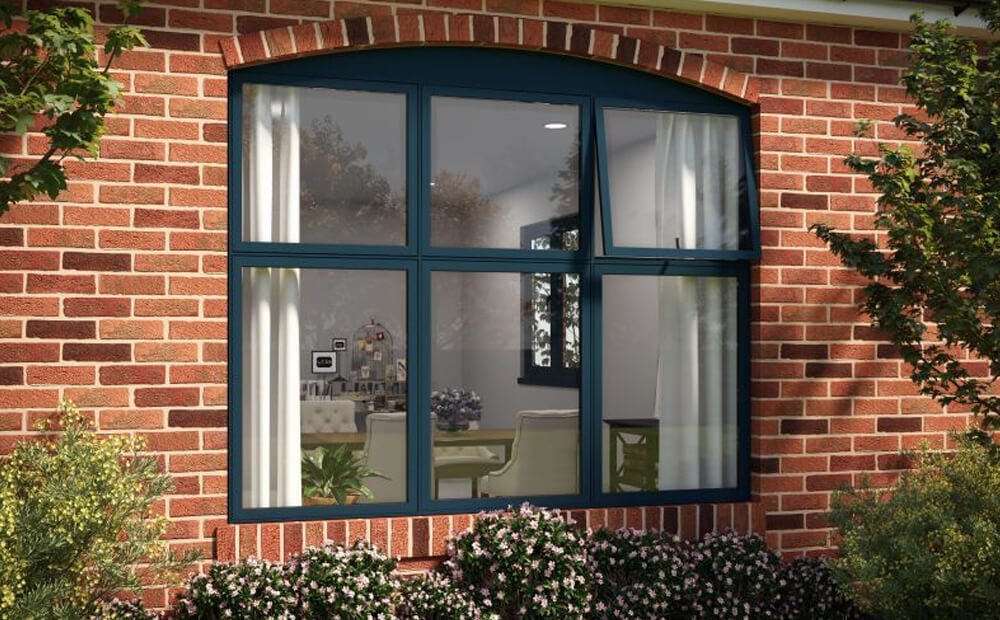
Aluminium vs Timber Secondary Frames
Almost all modern secondary glazing is thermally-broken aluminium, but timber still has a place in specific heritage settings. The choice comes down to sightline, dimensional stability and what the room already contains.
Why aluminium dominates
Aluminium can be extruded to a very slim section while carrying the weight of laminated glass and running gear. A slimmer frame means less of the original window is obscured, which is exactly what conservation officers care about. It does not swell, shrink, warp or need repainting, and powder coating gives a durable colour-matched finish in any RAL shade.
- Slimmest achievable sightline
- Dimensionally stable — no seasonal binding
- Powder coat in 200+ RAL colours
- Carries laminated glass without deflection
Where timber still wins
In a fully panelled Georgian interior, or where the reveal is lined in original joinery, a painted timber secondary frame can be made to read as part of the panelling rather than as an inserted modern element. Some conservation officers on high-grade listings prefer this. It costs more, needs a heavier section for the same span, and will need repainting on the same cycle as the rest of the joinery.
The thermal break point
Bare aluminium is a conductor, so any aluminium frame in a thermal application must be thermally broken — a polyamide barrier separating the inner and outer halves of the section. Cheap unbroken aluminium secondary frames exist, and they will condense on the frame even when the glass is dry. We do not fit them.
Frequently asked questions
Not if it is thermally broken, which ours are. An unbroken section will, which is why we do not offer one.
Ready for a free, no-obligation quote?
South Yorkshire's specialists in secondary glazing — survey, measure, manufacture and install.