
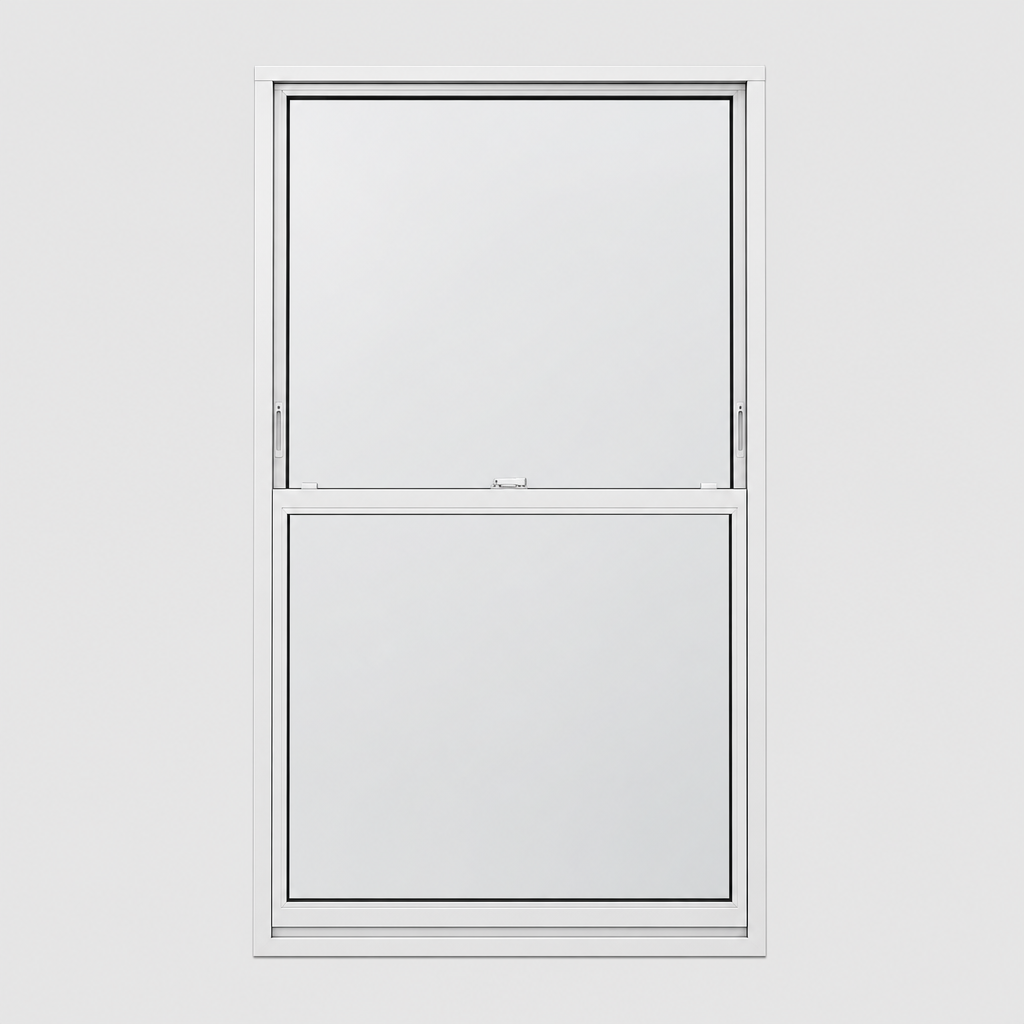
Secondary Glazing for Sash Windows
Original box sashes rattle, draw cold air and pass road noise straight through 3mm glass. A room side sash unit fixes all three without touching the historic window.
Why sash windows behave the way they do
A traditional box sash relies on a loose fit to run. The sashes must have clearance in the boxes to slide, the meeting rail seldom stays perfectly aligned as timber moves, and the glass is thin single float. That combination gives you rattle in wind, a steady cold draw at ankle height, and almost no acoustic resistance. Draught proofing the sash itself helps, but it cannot add mass or a cavity, so it never solves noise.
Which system to fit
A counterbalanced vertical slider is the default because it mirrors the original movement and keeps both halves of the window usable. A two panel horizontal slider is sometimes chosen on wide, low sashes where a vertical unit would need very tall panels. A lift out panel suits a sash that has been painted shut or a high level opening that is never used.
- Vertical slider for a working box sash
- Horizontal slider on wide low openings
- Lift out where the sash never opens
- Fixed panel on decorative or stained glass
Cavity depth and glass on a sash window
Sash reveals are usually deep enough to give a 100mm or larger cavity, which is exactly what acoustics need. Pair the original 3mm or 4mm glass with 6.8mm acoustic laminated room side, keep the two thicknesses deliberately mismatched, and seal the perimeter properly. Where the driver is warmth rather than noise, Low E soft coat glass in the same unit is the better spend.
Shutters, blinds, architraves and window seats
Period rooms are full of things a secondary unit has to respect. Working shutters need the frame set back into the box or face fixed clear of the folding line. Existing blinds and poles are measured at survey and either retained or refitted. Deep architraves are worked to rather than cut. Window seats and radiators under the sill decide whether a slider or a hinged unit is sensible.
- Working shutters retained and still folding
- Blinds and poles measured and refitted
- Architraves worked to, never cut back
- Radiator and seat clearance checked at survey
Keeping the original sash working
Nothing is fixed to the historic frame. The subframe fixes into the reveal or the architrave, so the sash cords, weights, pulleys and beading are untouched and the window still opens. Slide the secondary sash clear and the original works as it always did, which is what makes the installation reversible and, in most cases, acceptable in a listed or conservation setting.
What it will and will not fix
It will stop rattle, kill the draught, cut road and rail noise substantially, warm the room and usually stop condensation forming on the room side. It will not repair rotten timber, re-cord a broken sash or fix a window that has been painted shut, and it is not a substitute for maintaining the original joinery. Where sashes need repair we would rather that work happened first.
Frequently asked questions
Yes. We fix into the reveal or architrave, never into the sash box mechanism, so cords, weights and pulleys are untouched.
Sash windows quoted per opening
Send a photo of the window and rough sizes. We will confirm the right system and quote the acoustic and thermal options separately.